 Image 1 of 4
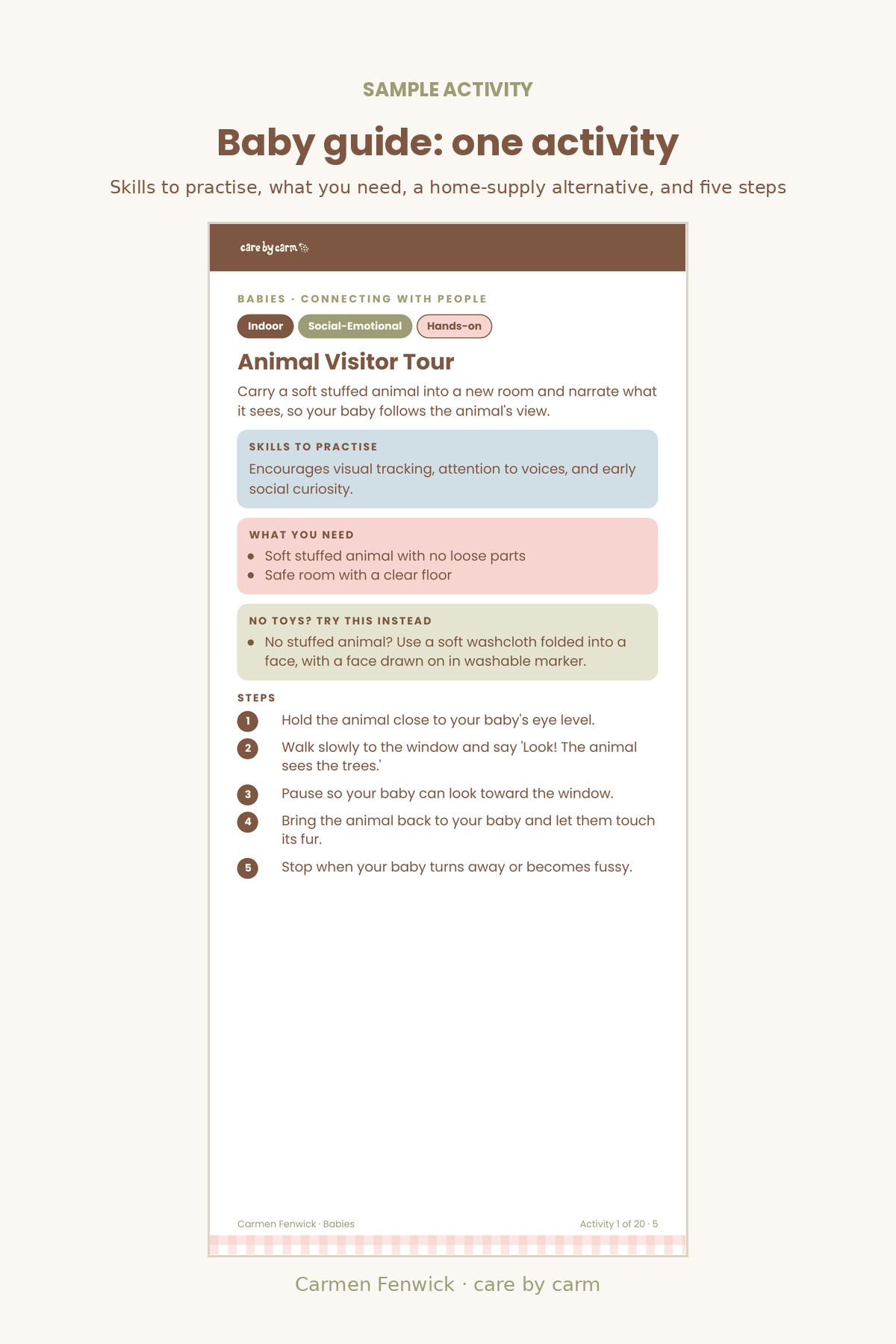 Image 2 of 4
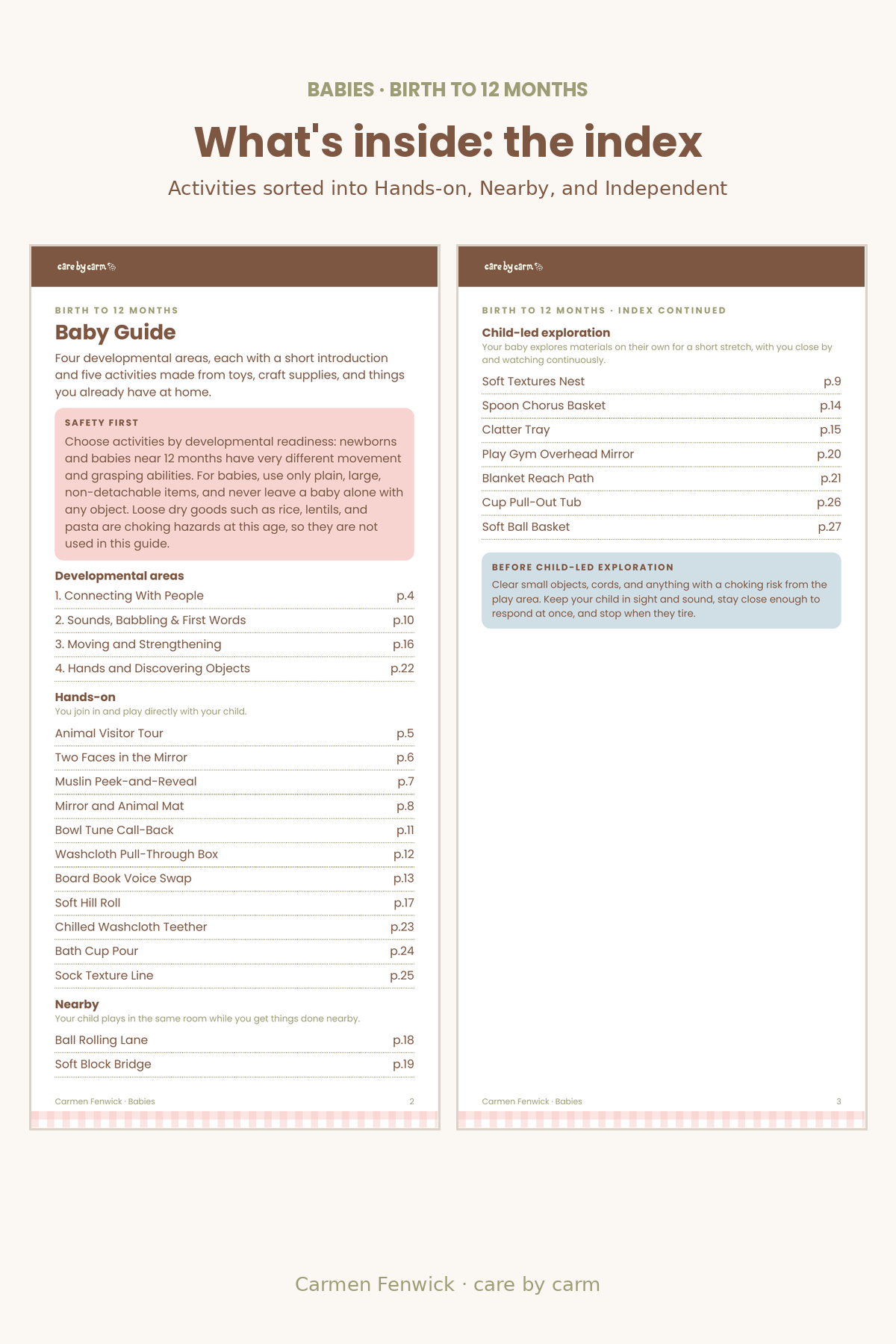 Image 3 of 4
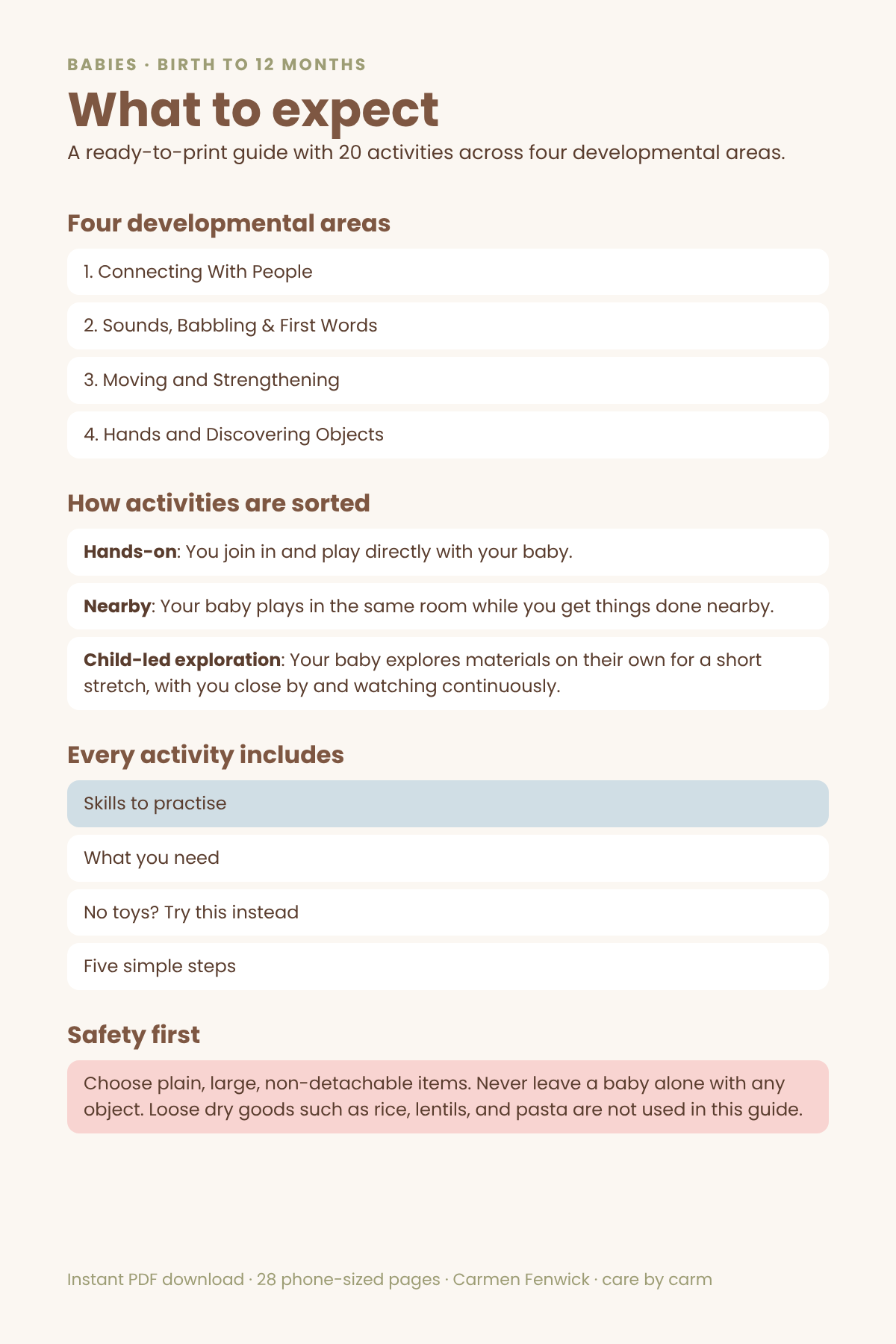 Image 4 of 4
Simple, screen-free play for babies, using toys and things you already have at home.
A printable play guide with 20 activities for babies from birth to 12 months. Each activity uses a toy, a household item, or a simple craft supply in a new way, so you rarely need to buy anything new.
Parents and caregivers who want gentle, hands-on ideas for everyday play, with clear guidance on what each activity is for and how to keep it safe.
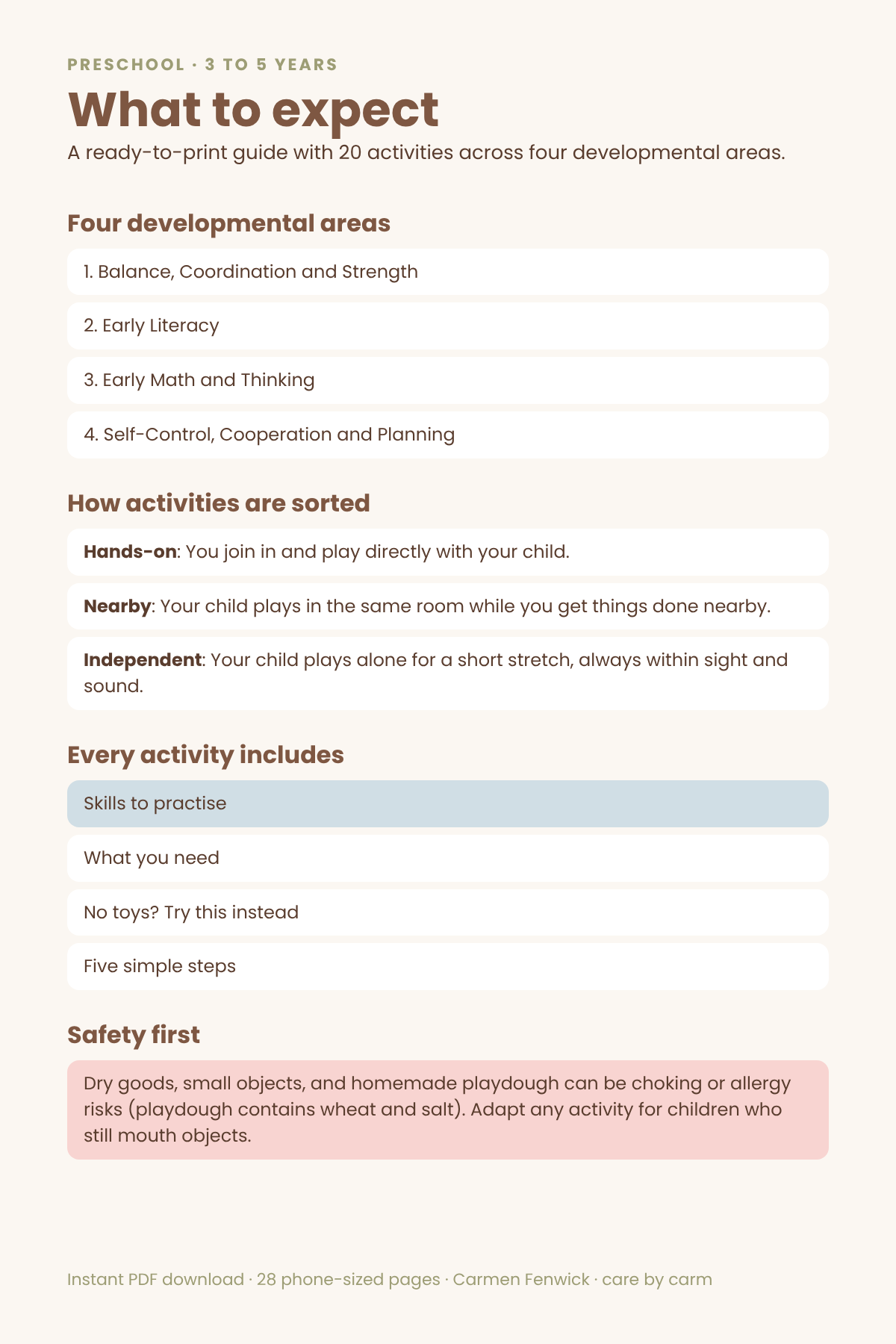
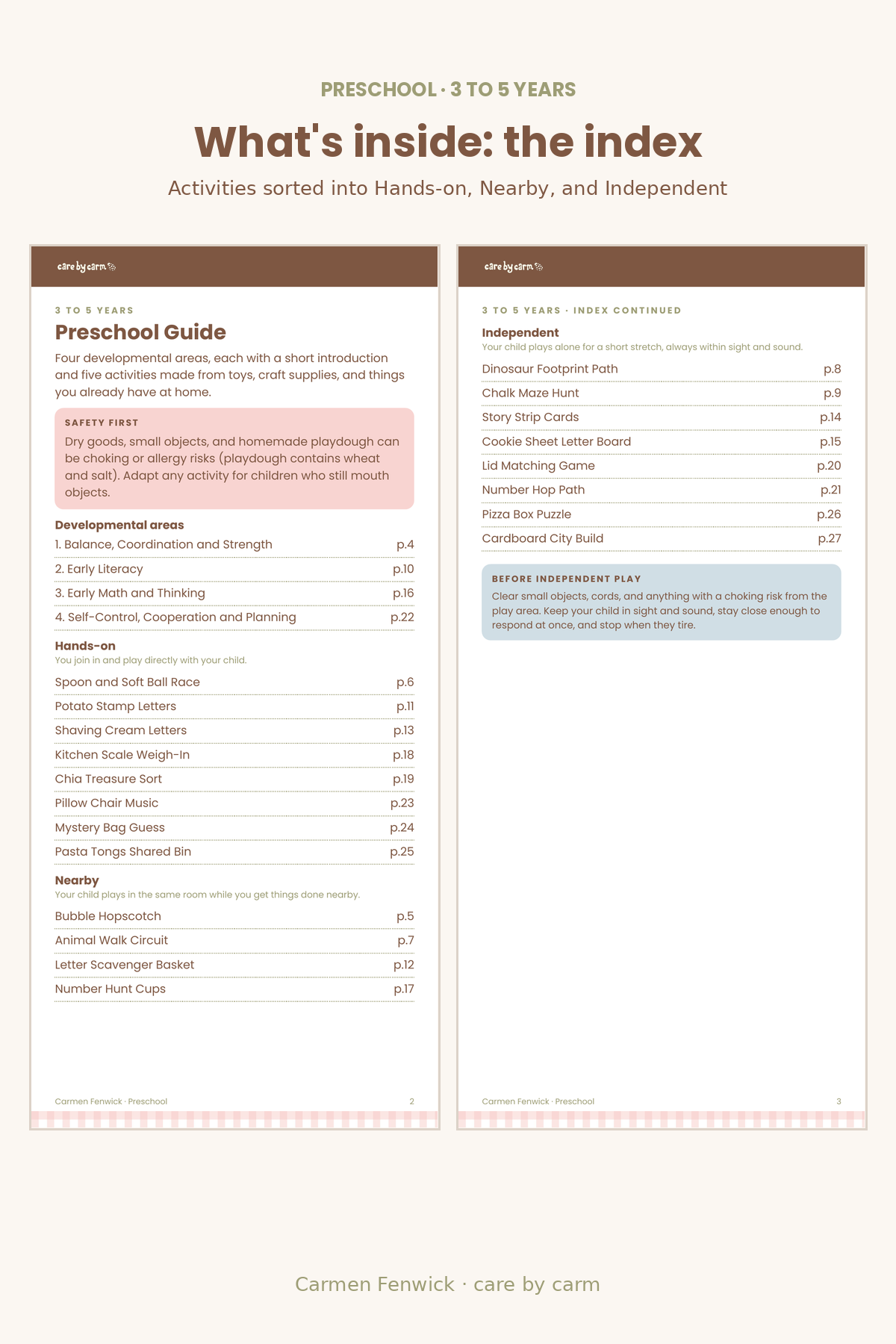
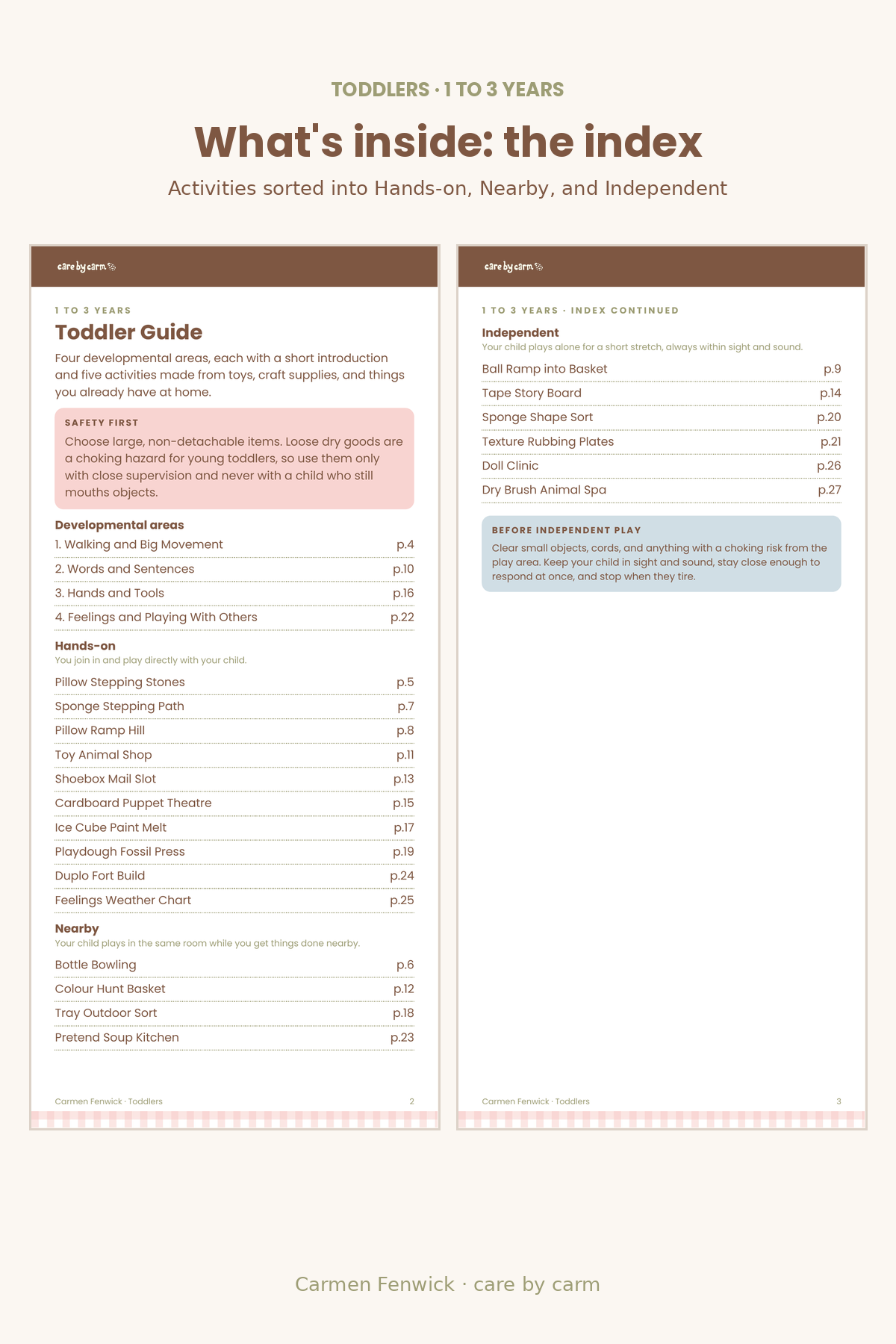
4 developmental areas: Connecting With People, Sounds, Babbling & First Words, Moving and Strengthening, and Hands and Discovering Objects
20 activities, five in each area
3 play styles: Hands-on, Nearby, and Child-led exploration
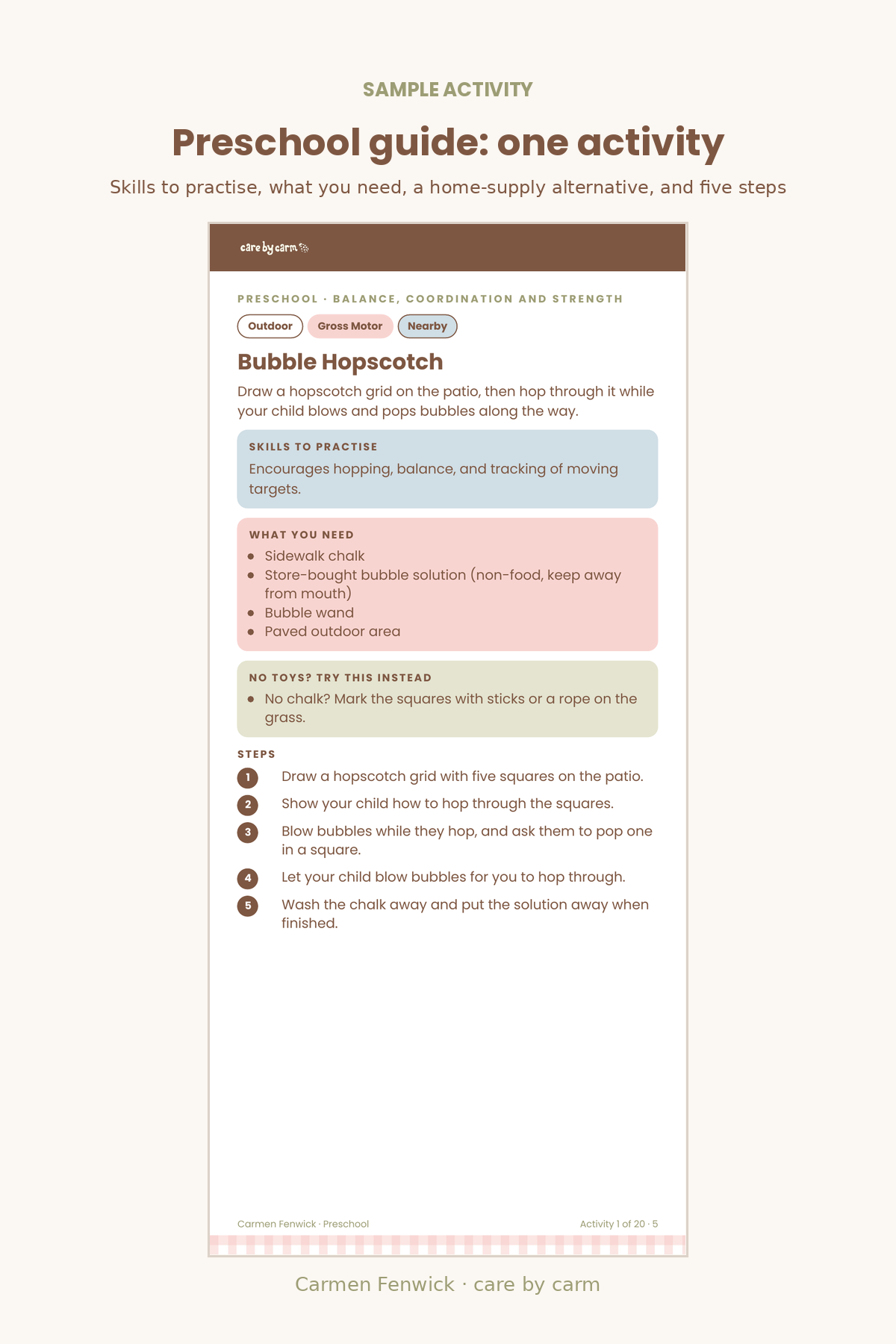
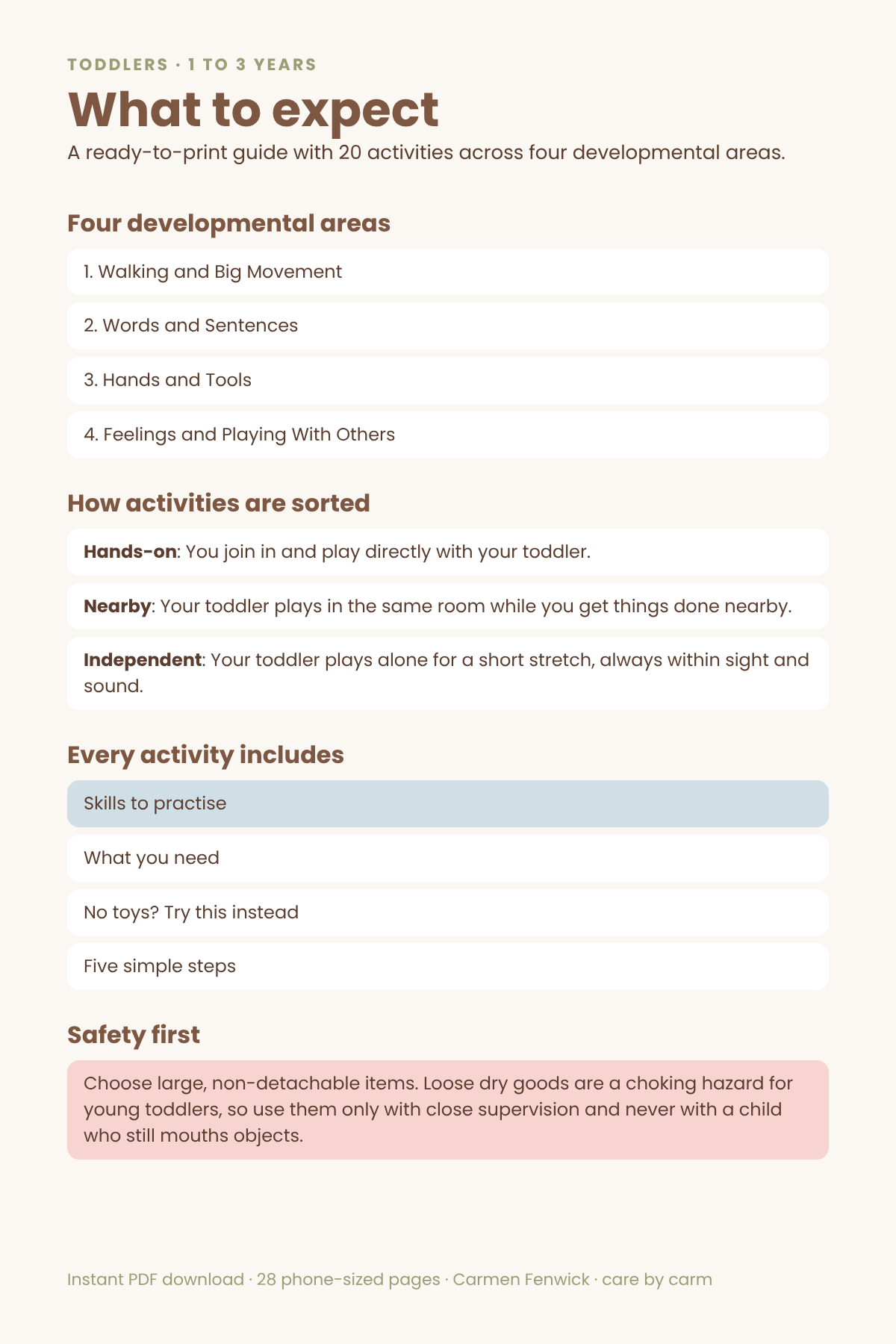
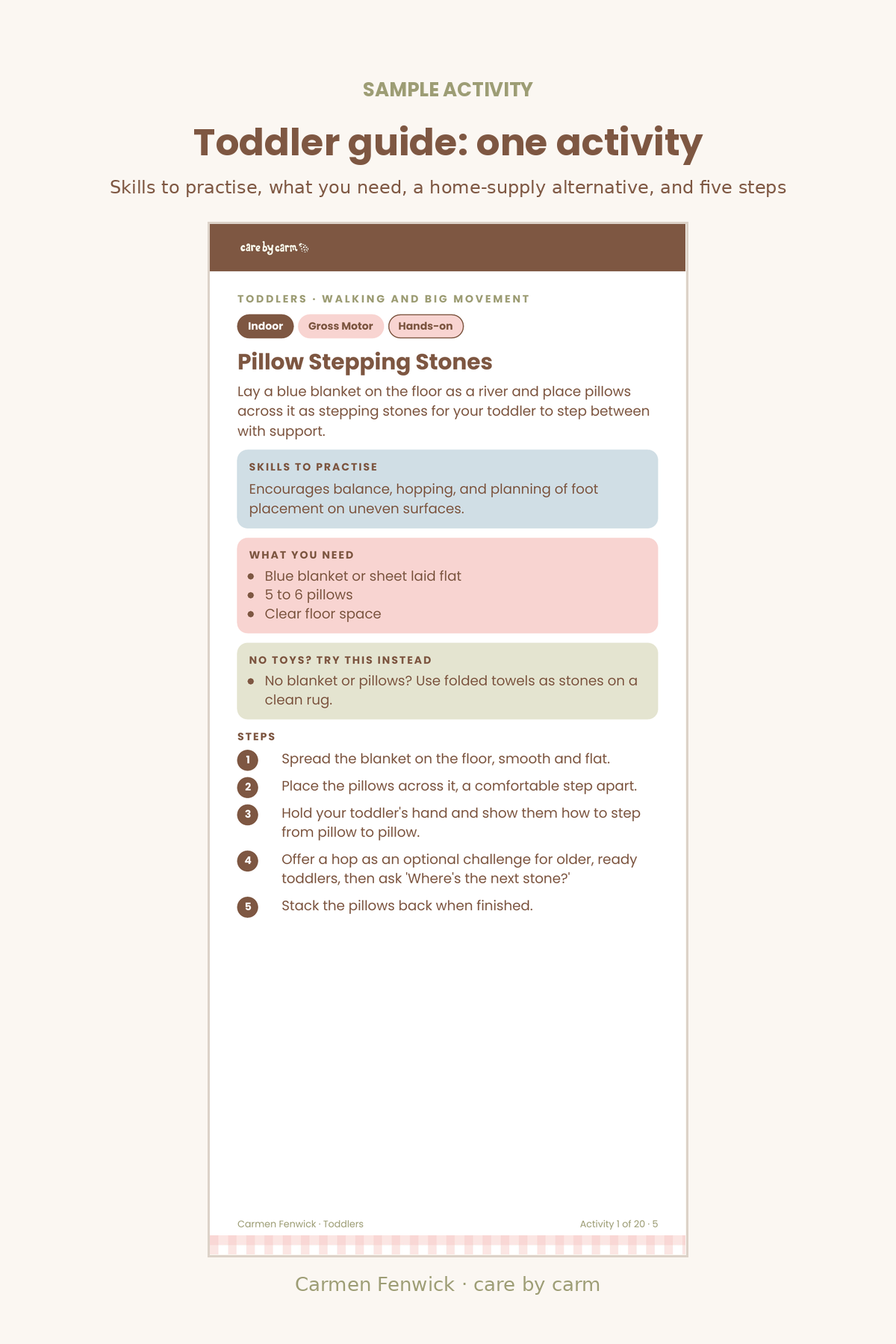
Every activity includes: Skills to practise, What you need, No toys? Try this instead, and five simple steps
Safety guidance and references for each area
Start with the area that matches your baby's current interests, then choose an activity that fits your baby's abilities that day. Activities can be repeated as your baby grows.
Choose plain, large, non-detachable items.
Never leave a baby alone with any object.
Loose dry goods such as rice, lentils, and pasta are not used in this guide.
Choose activities by developmental readiness. Newborns and babies near 12 months have very different movement and grasping abilities.
Instant PDF download
28 phone-sized pages, easy to read on a phone or print
Developmental areas draw on published research and CDC developmental milestone checklists. Each area notes the limits of its evidence. This guide supports play and is not a substitute for advice from your child's doctor or a qualified professional.
Little Hands, Big Growth is created by Carmen Fenwick (care by carm).