

 Image 1 of 4
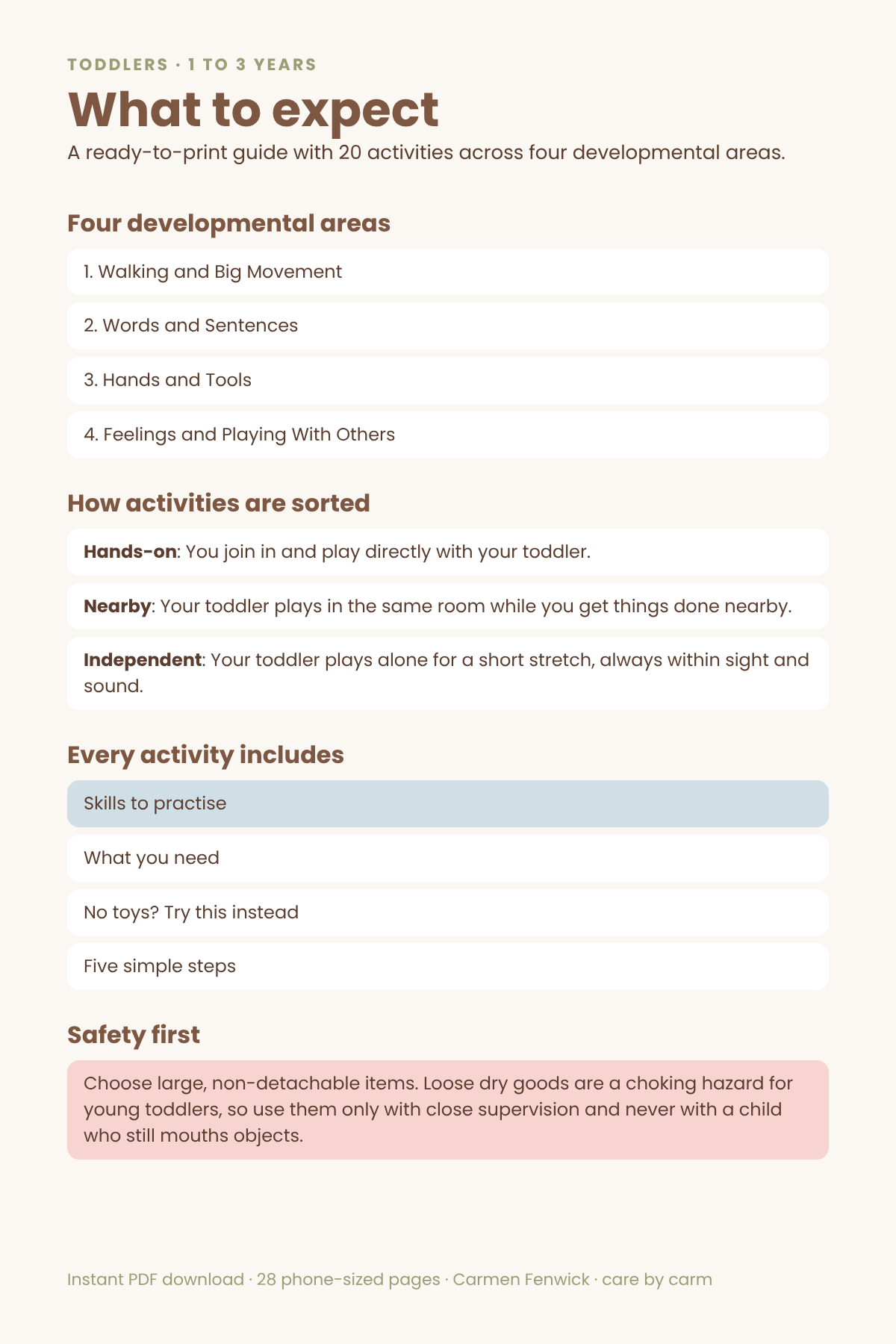 Image 2 of 4
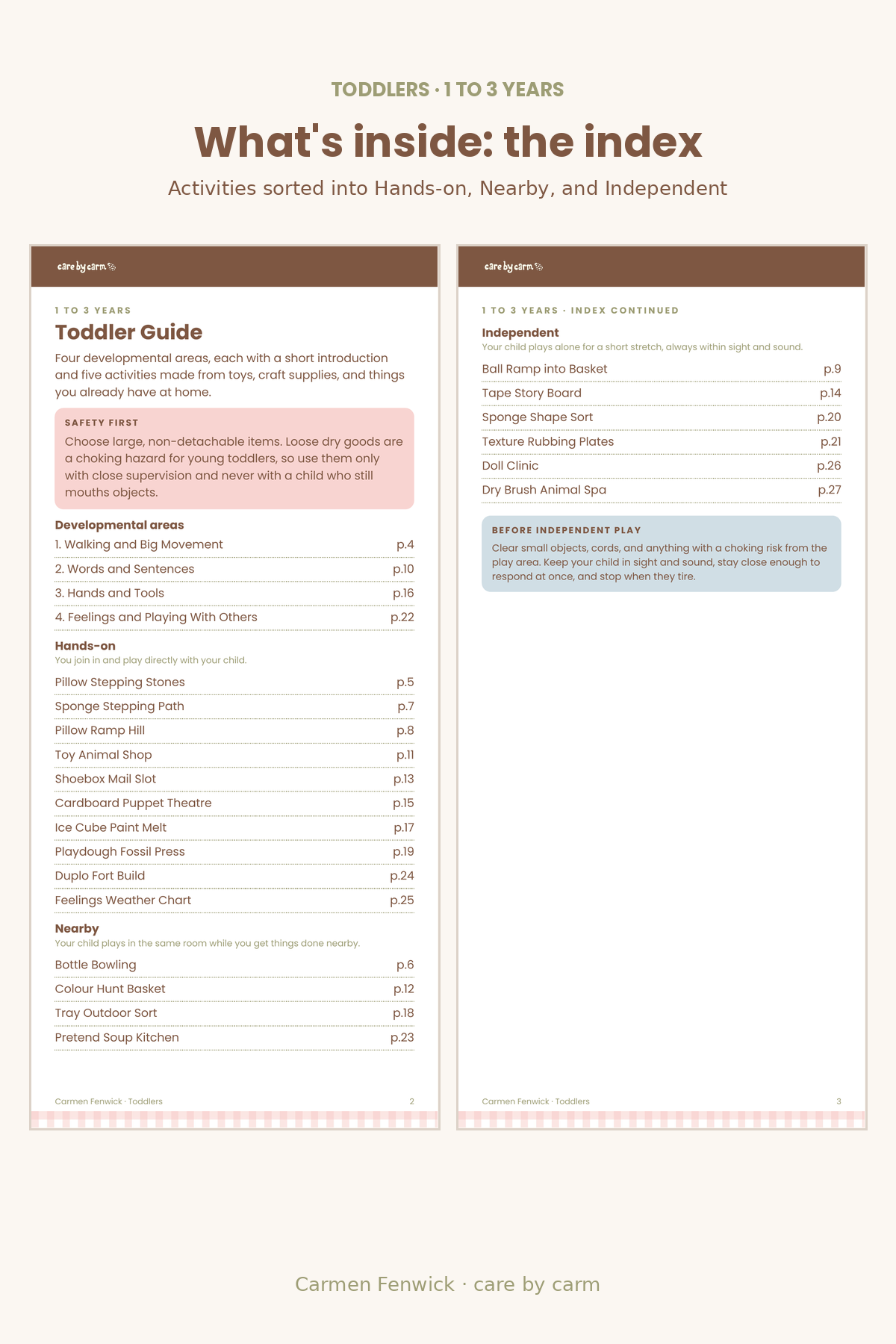 Image 3 of 4
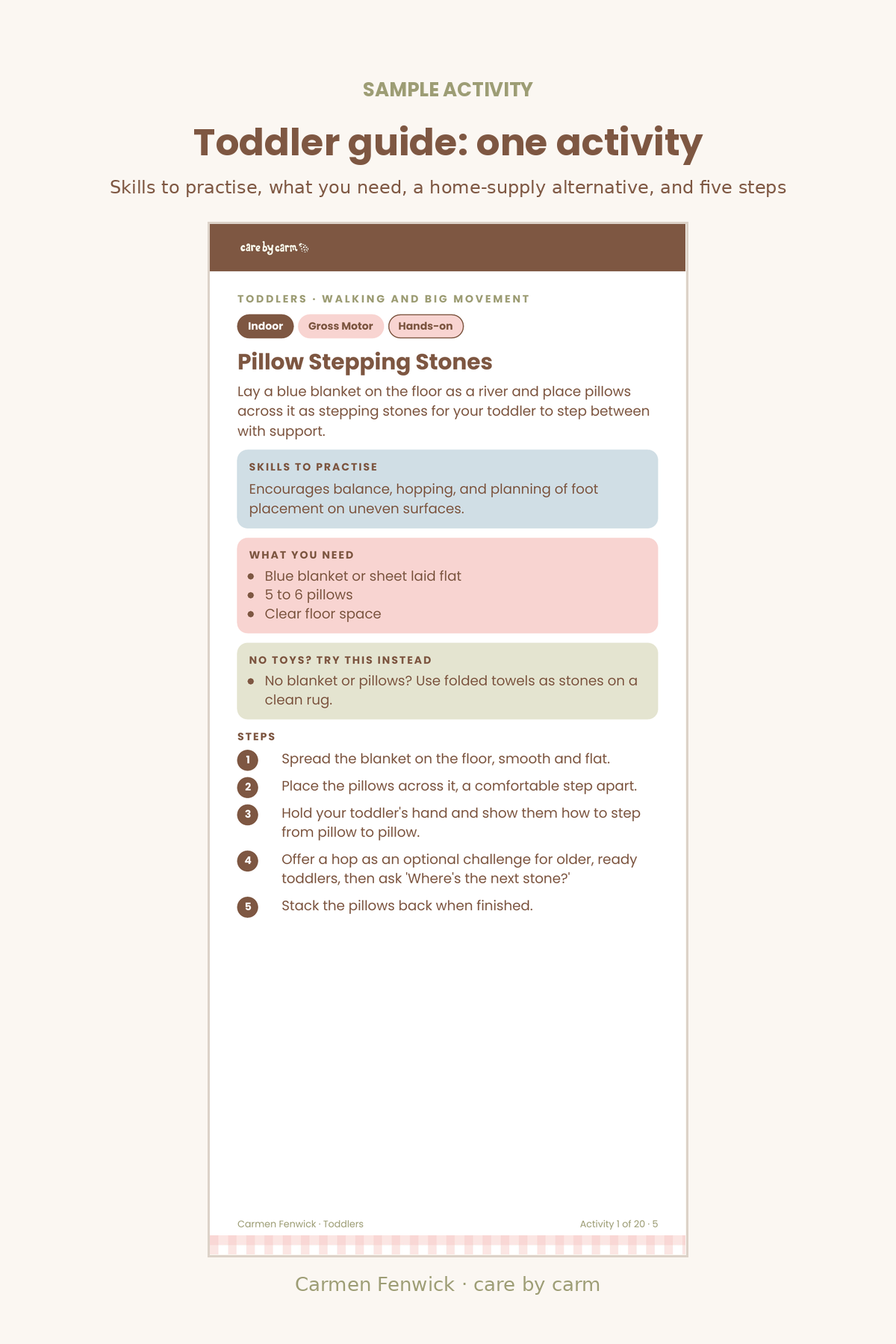 Image 4 of 4
Playful, low-mess ideas that use toys and household items in fresh ways.
A printable play guide with 20 activities for toddlers from 1 to 3 years. Each activity combines a toy with a household item or craft supply, so the play feels new and keeps curiosity going.
Parents and caregivers of toddlers who want simple ideas that keep little ones busy, support growing skills, and don't require buying new materials.
4 developmental areas: Walking and Big Movement, Words and Sentences, Hands and Tools, and Feelings and Playing With Others
20 activities, five in each area
3 play styles: Hands-on, Nearby, and Independent
Every activity includes: Skills to practise, What you need, No toys? Try this instead, and five simple steps
Homemade recipes where the age is right, such as playdough
Some activities suit outdoor play
Pick an area that matches what your toddler is working on. Use Hands-on activities when you want to play together, Nearby activities when you're in the same room while you get things done, and Independent activities for a short stretch of play within sight and sound.
Choose large, non-detachable items.
Loose dry goods are a choking hazard for young toddlers. Use them only with close supervision, and never with a child who still mouths objects.
Homemade playdough contains wheat and salt. It is not for children with a wheat allergy.
Stay within sight and sound during Independent play, and stop when your toddler tires.
Instant PDF download
28 phone-sized pages, easy to read on a phone or print
Developmental areas draw on published research and CDC developmental milestone checklists. Each area notes the limits of its evidence. This guide supports play and is not a substitute for advice from your child's doctor or a qualified professional.
Little Hands, Big Growth is created by Carmen Fenwick (care by carm).